If you’re debating whether your website needs Terms and Conditions, Terms of Service or Terms of Use, the distinction may be less important than it appears. Despite their different names, these phrases are commonly used interchangeably to refer to the same core document. In practice, all three describe an agreement that sets out usage rules, limits liability, and defines what users can expect from your service and what you expect from them in return. Let’s break it down.
Terms and Conditions vs Terms of Service vs Terms of Use: What do they mean?
Terms and Conditions (T&C), Terms of Service (ToS) and Terms of Use (ToU) usually refer to the same legal document. In most cases, they contain the same clauses and serve the same purpose: to define how a website or service can be used, what is restricted, and how legal responsibilities are handled.
The difference lies mainly in how businesses choose to label the agreement, not in how it functions. Search behaviour, industry norms, and regional preferences also influence which title is used.
These agreements almost always include the same core clauses, such as:
- acceptable and prohibited use
- account rules
- payments and subscriptions (if applicable)
- intellectual property rights
- disclaimers and limitation of liability
- termination and suspension
- governing law and dispute resolution
What matters from a legal and practical standpoint is the substance of the document, not its label. Whether you call it Terms and Conditions, Terms of Use, or Terms of Service, the agreement should clearly define user rights and responsibilities and explain how the relationship between you and your users works.
Does it matter what I call my Terms and Conditions?
Laws do not differentiate between Terms and Conditions, Terms of Service and Terms of Use. Both refer to agreements that a user must accept to use a service or purchase goods.
Let’s see some examples:
- Apple Media Services names it Terms and Conditions.
- Walmart prefers Terms of Use.
Many businesses use other titles for the same type of agreement, such as Terms of Service or User Agreement. For example, Open VPN and Facebook call it Terms of Service, while LinkedIn and Reddit prefer the title User Agreement.
So, whatever name you pick, keep it consistent across your website, mobile app and legal notices.
Are the terms of conditions the same as the privacy policy?
Terms and Conditions set the rules for using your website or service, while a Privacy Policy explains how personal data is collected, used, and protected. When comparing terms and conditions vs privacy policy, the key difference is that a Privacy Policy is usually a legal requirement under data protection laws, whereas T&Cs are generally optional but strongly recommended.
Why you need terms regardless of its name
Here are the top 4 reasons why you need Terms and Conditions:
1. Legal protection and enforceability
A clear set of terms helps limit your legal exposure. By outlining what you promise and what you do not promise, and by including warranty disclaimers, liability limitations and governing law clauses, you reduce your risk of lawsuits.
Courts may consider these contracts legally binding if users agree to them and the terms are fair and reasonable. By using an explicit consent mechanism, often called clickwrap, where users must tick a box or click “I agree” , you can strengthen its enforceability.
2. Managing expectations and preventing disputes
Your ToS, ToU or T&C set expectations for how the service works and how users should behave. They cover everything from payment methods and subscription renewal to user conduct and community guidelines. Clear rules help prevent misunderstandings and reduce the likelihood of disputes, such as chargebacks or complaints about service interruptions.
3. Protecting intellectual property and content
If your site or app contains original content, software or branding, your agreement could protect your intellectual property. It can grant a limited licence for personal use while prohibiting copying, modification or redistribution.
4. Building trust and transparency
Even if terms and conditions are not legally required for all websites, having one demonstrates transparency and professionalism. Using plain language and explaining how you collect and use personal data can build trust. This is especially important if you process personal information and need to comply with privacy and cookie regulations.
Are Terms and Conditions legally binding?
Yes, Terms can be enforceable. In most cases, agreeing via clickwrap or a similar method would count as acceptance. However, the agreement must be accessible, understandable, fair and lawful.
Can Terms and Conditions protect a company?
Yes, Terms and Conditions can protect a company.
They help set clear rules for how users can use your website or service, limit your liability, and explain what happens if someone misuses your platform. Well-written T&Cs can also support your business in disputes by showing what users agreed to before using your product.
Key clauses for Terms of Conditions vs Terms of Use vs Terms of Service
Below are the core sections you might include in your terms. Check out the Terms and Conditions Template for a detailed look.
- Introduction and User eligibility: Identify your business, describe the purpose of the agreement and explain who can use your service. You may specify a minimum age (e.g., 18 years) or require parental consent for minors.
- Account registration and security: If your service requires accounts, describe how to register, the need for accurate information, and the user’s responsibility for safeguarding login credentials.
- User conduct and prohibited activities: Set expectations for how users should behave. List prohibited activities such as spamming, hacking, and posting illegal or offensive content.
- Payment, pricing and refunds: If you sell products or subscriptions, outline payment methods, billing cycles, taxes, refund conditions and how customers can cancel.
- Intellectual property rights: Assert ownership of your content, software and branding. Grant users a limited licence for personal, non‑commercial use and prohibit copying, modification or resale.
- Privacy and data protection: Reference your privacy and cookie policies. Explain what personal data you collect, why you collect it and how users can manage their preferences.
- Disclaimers and liability limits: Provide your service “as is” and clarify that you do not guarantee uninterrupted, error‑free access.
- Indemnification: State that users are responsible for compensating your business for losses or claims arising from their misuse of your service or violation of the terms.
- Governing law and dispute resolution: Specify which jurisdiction’s laws apply to the agreement and whether disputes will be resolved through courts, arbitration or mediation. Some businesses also include class‑action waivers or time limits for bringing claims.
- Modifications: Explain that you may update the terms and how you will notify users. Include an effective date and keep an archive of prior versions to maintain transparency.
- Termination: Describe situations where you may suspend or terminate a user’s account and how users can close their account.
Depending on your industry or location, you may also want to include provisions on service availability, severability, assignment of rights, force majeure, non‑waiver of rights and non‑agency relationships. Tailor these sections to match your particular service and jurisdiction.
How to write clear and user-friendly T&C vs ToS vs ToU?
Follow this checklist to write a user-friendly T&C that is also likely enforceable in courts:
- Write in plain language: Avoid dense legal jargon. Use short sentences and layman words so that non‑lawyers can understand. Provide definitions or a glossary for any technical terms.
- Be transparent: Explain what you collect, what you do with it and why. Don’t hide important information in fine print.
- Use a clear consent mechanism: Make users actively agree to your terms through a checkbox or button. Place links to your terms near the consent option and ensure the document is easy to access.
- Keep it current: Review your terms regularly. Update them when your business model changes, when you launch new features or when laws change.
- Coordinate with your privacy policy: Your terms should complement, not contradict, your privacy and cookie policies. Ensure these documents are consistent and easy to navigate.
- Consider local law: If you operate globally, provide region‑specific notices or adaptations. In some jurisdictions, you may need to translate your terms or obtain additional consents.
Where should you post your Terms?
To be effective and enforceable, your Terms and Conditions should be placed where users can easily find them before and during use of your website or service.
Website footer
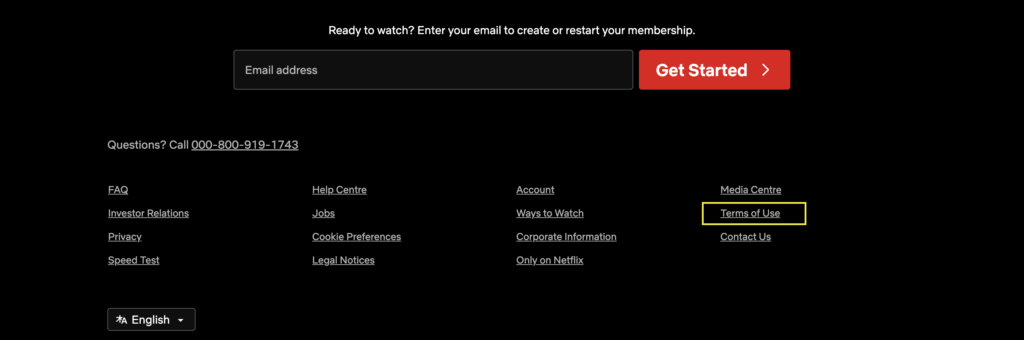
Most websites link their Terms in the footer. This ensures the document is accessible from every page and meets basic visibility expectations.
Netflix links its Terms of Use in the footer of its website.
Signup and registration pages
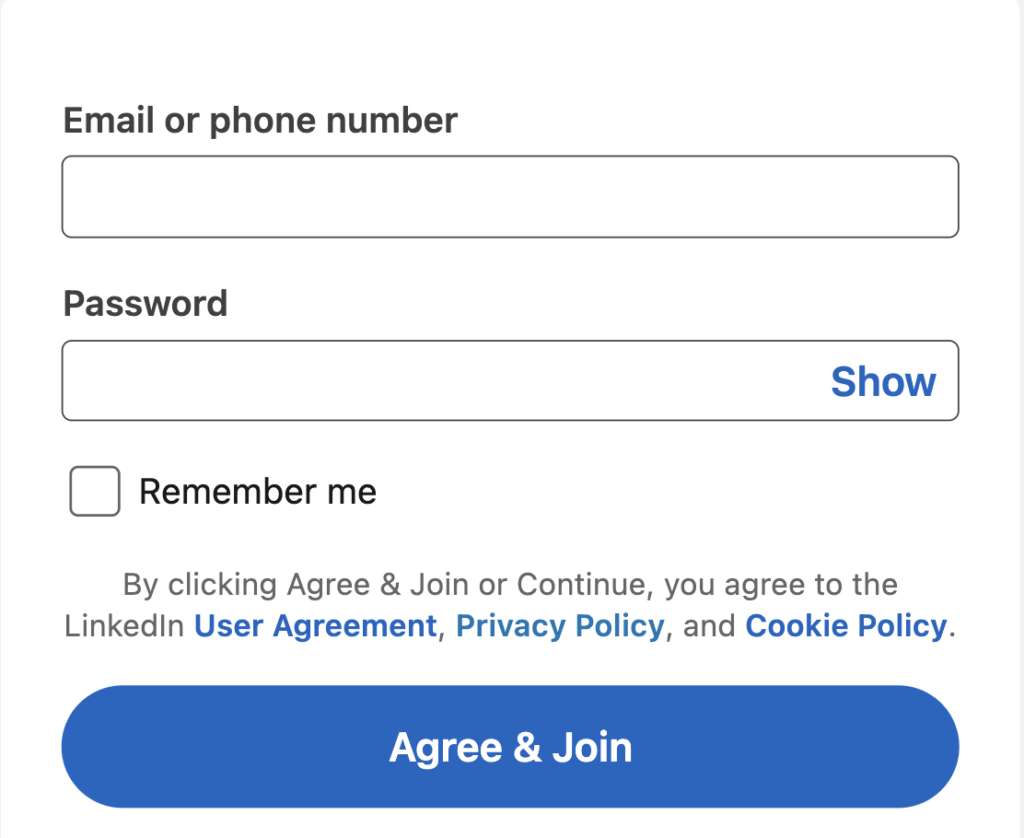
If users create accounts, it’s best to link your Terms near the signup button. Many businesses also ask users to confirm they’ve read and agreed to the Terms during registration.
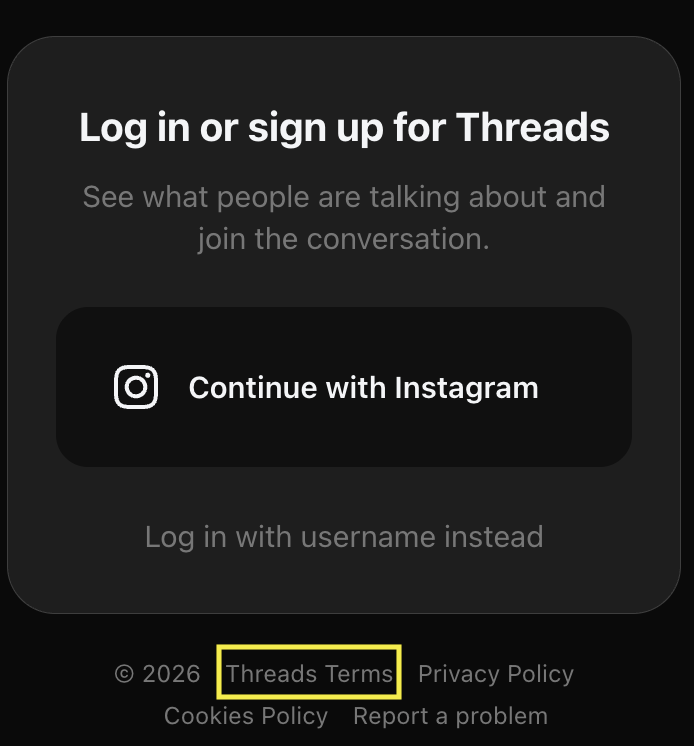
Threads links its terms on the login panel (see the bottom).
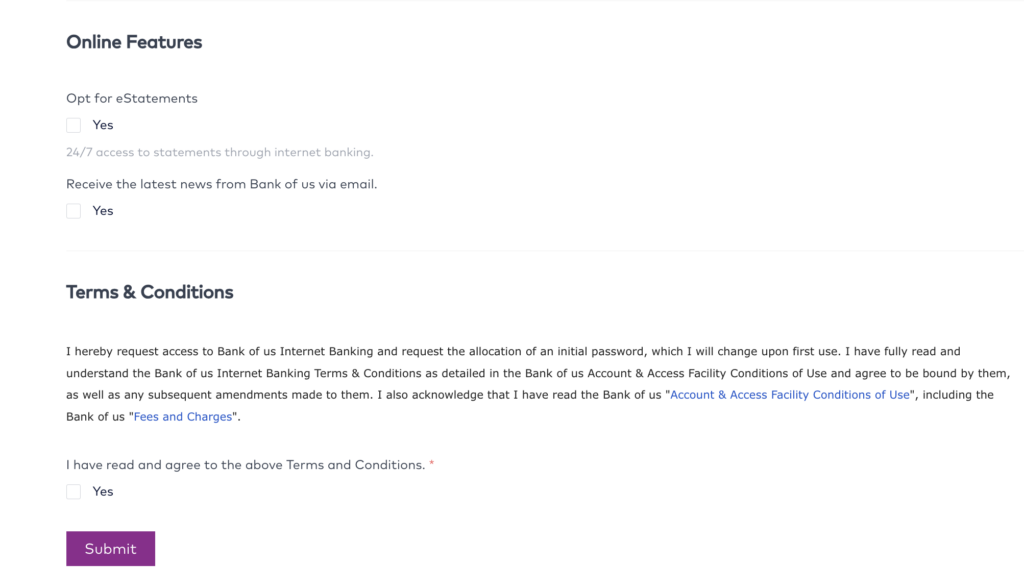
Similarly, the Bank of US asks you to accept the Terms and Conditions before registering for its internet banking services.
Checkout and payment pages
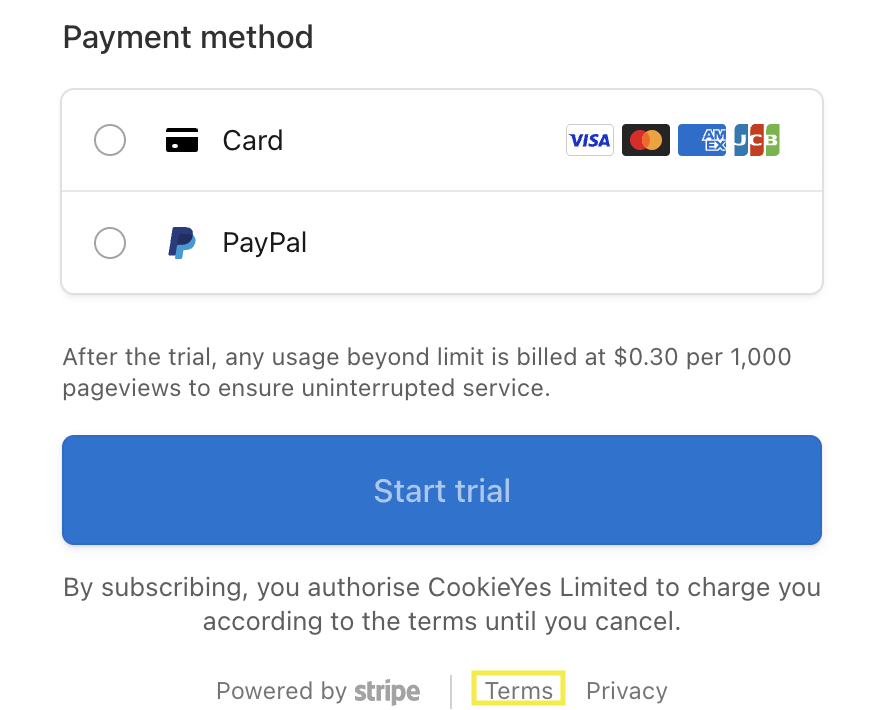
For ecommerce or subscription services, your Terms should be linked during checkout. This helps set clear expectations before a transaction is completed.
In-app or account settings
For apps and SaaS platforms, Terms are commonly available within account settings or onboarding screens so users can review them at any time.
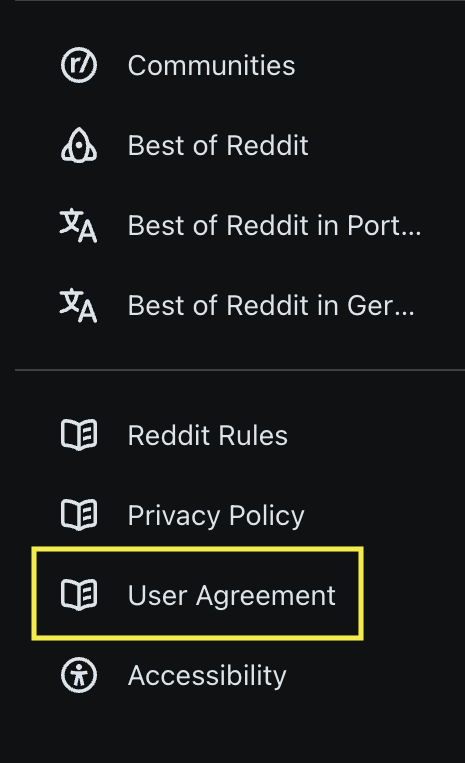
This snippet from the Reddit menu shows the User Agreement being displayed.
Anywhere acceptance is required
If your Terms are legally binding, users should have a reasonable opportunity to review them before accepting. Linking them wherever consent is collected helps support enforceability.
Are ToS and EULA the same?
Terms and Conditions (T&C) or Terms of Service apply broadly to how users interact with a website, app, or service. They set the overall rules for use, define acceptable behaviour, explain payment and account terms, and outline dispute resolution and liability limits. T&C are commonly used by websites, SaaS platforms, and online services.
A End User License Agreement (EULA) is more specific. It governs the use of licensed software and explains how the software may be installed, accessed, and used. EULAs focus on licensing rights, usage restrictions, intellectual property ownership, and limitations on copying, modifying, or redistributing the software.
In short:
- T&C cover the relationship between a business and its users as a whole.
- EULA focuses specifically on software licensing and usage rights.
Many digital products use both Terms and Conditions for the service overall, and an EULA for the software component.
For example, Apple has both an EULA and Terms & Conditions page.
Conclusion: What should you call your agreement?
T&C, ToU and ToS are widely used interchangeably in practice. The difference is not legal, but contextual. The name you choose usually depends on how your business operates and how you want users to perceive the agreement.
- Many businesses prefer Terms and Conditions because it is familiar and widely understood across regions.
- Terms of Service may feel more appropriate for software platforms or subscription-based services, while Terms of Use often suits content-focused websites.
Regardless of the title, what matters most is that the agreement clearly explains user rights, responsibilities, and limitations and is presented in a way that users can reasonably agree to.
By using simple language, tailoring your clauses to your business and region, and keeping the document up to date, you can create a legally sound agreement that builds trust and safeguards your company.
If you’re unsure where to start, a terms and conditions generator or sample can be a helpful starting point, but always review the document to confirm it fits your unique situation and, if needed, seek professional legal advice.
FAQs on Terms and Conditions vs Terms of Service vs Terms of Use
The subject to change clause in a ToS or T&C informs users that some aspects of the agreement, such as pricing, subscription terms or product specifications, may be updated over time. The purpose is to give your business flexibility to adapt without re‑negotiating the entire contract. To remain fair, you should provide reasonable notice of any material changes, explain how the changes will take effect, and give users an opportunity to accept or decline the updated terms.
Terms of service and terms and conditions refer to the same type of agreement. The label you choose is largely a matter of preference and emphasis. What matters more is that your terms cover the key clauses relevant to your business and that users agree to them.
Using a professional terms and conditions generator or template can save time and help ensure your document covers the essentials. Many businesses find it helpful because it provides a framework tailored to specific industries and regions. However, you should always customise the clauses to match your service, location and risk tolerance. Copying another site’s terms without permission can violate copyright law and lead to legal disputes.
T&C stands for terms and conditions, which is shorthand for the contract that sets out the rules of engagement between a service provider and its users. This abbreviation is often used interchangeably with ToS and ToU.
Not necessarily. Think of this list as a starting point. The right mix of clauses on your terms will depend on what you offer, where you operate, and who your users are. Focus on fairness, clarity and compliance with applicable laws.
Terms of Service (ToS) refer to the legal terms that govern how users may access and use a website, app, or online service. Also known as Terms and Conditions or Terms of Use, a ToS sets clear rules for user conduct, explains account and content ownership, and outlines when access may be restricted or terminated. Its main purpose is to protect the business while giving users a clear understanding of their rights and responsibilities.
Key aspects of Terms of Service include:
- Usage rules: Clear guidelines on what users are allowed and not allowed to do on the platform.
- Legal acceptance: Users usually agree to the ToS by clicking an “I agree” button or by continuing to use the service.
- Content permissions: Details on how the platform may host, display, or use content shared by users.
- Enforcement: Consequences for violations, such as account suspension or termination.
Yes. Terms and Conditions and Terms of Use generally refer to the same type of legal agreement. Both set out the rules users must follow when accessing a website, app, or service. The difference is in the title only, while the purpose and legal function remain the same.

Safna is the resident data privacy writer at CookieYes, where she breaks down privacy laws into actionable insights for businesses. The rest of her time is a mix of music, movies, and hot chocolate.